

How I'm Profitable Even Though I'm an Idiot
The biggest advantage I've found in trading was learning to stop acting smart.

This title probably sounds ridiculous coming from someone who’s been trading for six years, especially because if you asked me what I’ve spent most of those years doing, I’d probably answer with things that sound very “intelligent.” I’ve manually backtested thousands of trades, collected an unhealthy amount of data, refined my execution over and over again and spent countless hours trying to understand why markets behave the way they do. From the outside, it would be easy to assume that profitability came from becoming smarter.
The funny thing is that I don’t think that’s true anymore.
If I had to point to one reason why I eventually became profitable, it would be probably because I slowly stopped trying to prove that I understood it at all. Somewhere along the journey, I accepted that the market is simply too complex for me to explain every move, and the moment I stopped demanding certainty from it, trading actually became much easier.
When I first started, I wanted an explanation for everything. Every winning trade needed to make perfect sense. Every losing trade had to have a reason. If price rejected a level, I wanted to know exactly why. If it broke through, I wanted another explanation. I genuinely believed that if I could understand enough, there would eventually come a point where I would stop being surprised by the market.
Looking back, that was probably one of the biggest misconceptions I ever had.
The highest IQ will not help you at all. Reading more books will not help you also. It also doesn’t matter how convincing your analysis sounds on social media. In school, the smartest person is usually the one with the right answers. In trading, the person who survives the longest is often the one who’s comfortable admitting they don’t have them.
That’s a completely different game.
Even today, there are plenty of days where I honestly have no idea what the market is going to do next. Five years ago that would’ve made me uncomfortable because I thought uncertainty meant I wasn’t prepared enough. Now I see it as a completely normal part of the job. My edge has never been predicting the next candle. My edge is that I’ve built a process that doesn’t require me to know what’s going to happen next in order to make money over the long run.
I think that’s something many beginners struggle to accept because it sounds almost too simple.
We’re taught that if we study harder than everyone else, we’ll eventually figure it out. We assume that successful traders must know something we don’t. That they can read the market better, interpret news better or somehow predict price with a level of accuracy the rest of us simply haven’t reached yet.
After meeting a lot of profitable traders, I honestly don’t think that’s true.
If anything, the traders who impressed me the most were usually the least interested in sounding intelligent. They weren’t trying to predict every move or explain every candle. They had a process, they trusted it and they understood that probabilities don’t care whether today’s trade wins or loses.
Ironically, the more I simplified my own trading, the better my results became.
These days my trading is honestly quite boring. I wait much longer than I used to. There are days where I don’t take a single trade because nothing fits my criteria, and there are other days where I spend hours doing absolutely nothing before executing a setup that takes less than thirty seconds to enter. Sometimes it wins, sometimes it loses, and most of the time I genuinely don’t know which one it’s going to be before I click the button.
Years ago I would’ve considered that lazy.
Today I think that’s what professionalism actually looks like.
I’ve noticed this mindset slowly spreading into the rest of my life as well. The older I get, the less interested I am in having an opinion about everything, and the more comfortable I become saying, “I don’t know.” I’ve realized there’s a huge difference between confidence and certainty. Confident people don’t pretend to have all the answers. They’re simply comfortable acting despite not having them.
I think people massively overestimate intelligence and underestimate consistency.
Intelligence might help you build a good process, but discipline is what allows you to follow that process on the days when you don’t feel like it. Humility is what allows you to admit that the market knows something you don’t. Patience is what keeps you from forcing trades that were never there in the first place.
Trading probably rewarded me because I eventually accepted that I wasn’t smart enough to predict the market, so instead of trying to outsmart it every single day, I built a process that allowed probabilities to do the heavy lifting for me.
Here is my actual account I am trading.
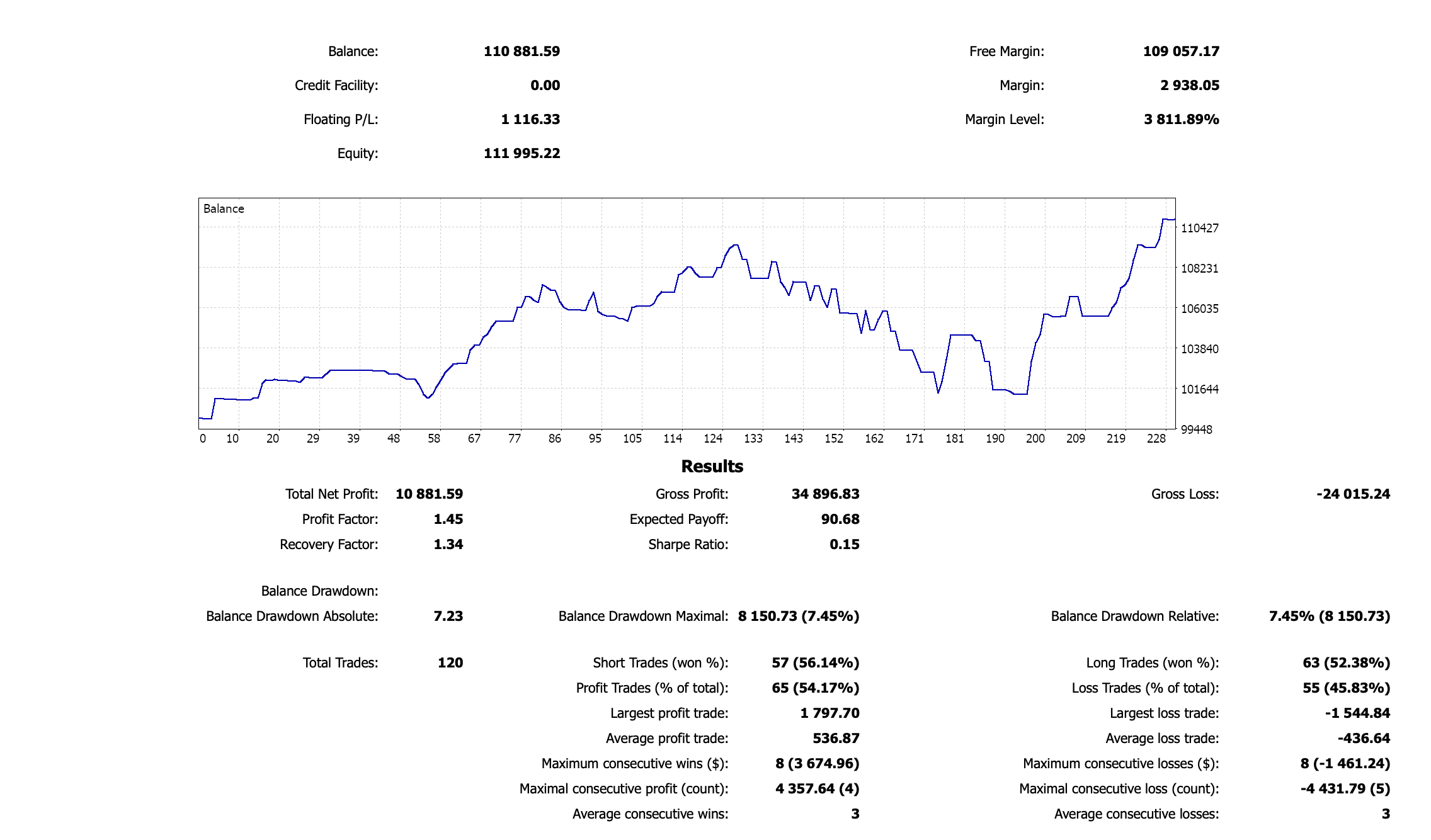
And if there’s one lesson I’ve learned after almost six years of trading, it’s that the market has never paid me for sounding intelligent.
Bless you all.
Luke
any tips on not rushing the process, you see all these traders scaling so quickly and hitting these massive days/months… how do I not compare myself to them?